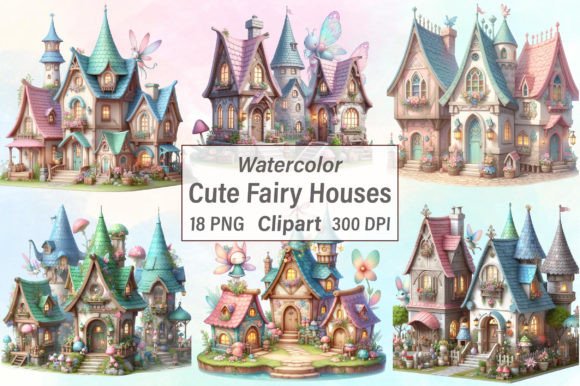
Watercolor Cute Fairy Houses Clipart for Enchanting Design
There is something immediately disarming about a tiny, whimsical house nestled among mossy stones and curling vines. Watercolor Cute Fairy Houses Clipart captures that specific brand of charm—soft, storybook architecture rendered in translucent washes of color that feel both magical and approachable. Whether you are building a brand identity for a botanical boutique, designing children’s book illustrations, or creating social media content for a wellness brand, this style of clipart brings a warmth that hard-edged vector graphics rarely achieve.
The watercolor effect gives each fairy house a handmade quality. Colors blend gently at the edges, creating subtle gradients that mimic natural light filtering through a forest canopy. Rooftops might curve like mushroom caps, doors appear as tiny arched openings framed by wild roses, and chimneys emit the faintest suggestion of smoke. Because each element carries that soft, wet-medium look, the clipart feels alive—as though it was painted on paper rather than generated in software. That tactile sense matters in a digital landscape where so much design feels sterile.
For designers and content creators, this clipart is not just decorative fluff. It is a storytelling tool. A fairy house implies a world beyond the frame. It suggests tiny inhabitants, hidden gardens, and quiet adventures. That narrative quality makes the clipart especially effective for projects that need to evoke comfort, imagination, or a gentle escape from the every day.
Distinct Visual Traits That Define the Style
Watercolor Cute Fairy Houses Clipart distinguishes itself through a combination of deliberate imperfection and cohesive color palettes. The houses rarely appear in isolation. Many sets include配套 elements—lanterns, stepping stones, garden gates, oversized flowers, and tiny bridges—that allow you to build complete scene compositions. The watercolor technique introduces natural variation. No two leaves or roof tiles look identical, which prevents the repetitive stiffness that can plague clipart collections.
The color stories tend toward muted pastels and earth tones: sage greens, dusty pinks, lavender grays, warm ochres, and soft teals. These hues work harmoniously because watercolor naturally diffuses pigment, creating seamless transitions between shades. Bright neons or harsh primaries rarely appear, which keeps the overall look gentle and cohesive. When you drop one of these fairy houses into a layout, it does not scream for attention. It invites closer looking.
Another defining trait is the balance between detail and negative space. The houses are intricate enough to feel special—tiny windows, textured roofing, delicate foliage—but they are not so dense that they overwhelm other design elements. This makes them ideal as focal points in logo design or as accent illustrations in editorial layouts. A single fairy house can anchor a page composition without competing with headlines or body text.
Where This Clipart Shines Across Creative Projects
Brand identity work benefits enormously from the watercolor fairy house aesthetic. Small businesses in the wellness, botanical, children’s education, and handmade goods sectors often struggle to find visuals that feel both professional and personal. A logo featuring a watercolor fairy house communicates warmth, care, and a connection to nature. It works beautifully on packaging for herbal teas, organic soaps, or artisan candles. The soft watercolor texture reads as artisanal, which aligns perfectly with brands that emphasize craftsmanship.
Wedding stationery is another natural fit. Save-the-dates, invitation suites, and thank-you cards featuring fairy houses evoke a enchanted garden theme without veering into cliché. The clipart pairs well with modern calligraphy or a clean serif font for names and dates. You can scale the houses down as subtle corner embellishments or let one sit large as a full back-page illustration.
Children’s publishing and educational materials represent a major use case. Picture books, activity sheets, classroom décor, and digital learning resources benefit from illustrations that spark curiosity. Watercolor Cute Fairy Houses Clipart offers a consistent visual language across multiple assets, which helps maintain brand identity in a series of workbooks or a full book series. The style feels timeless rather than trendy, so it holds up well across print cycles.
Social media graphics for lifestyle, home décor, or parenting accounts also perform well with this clipart. A square post featuring a fairy house with an inspirational quote overlay immediately stops the scroll. Because watercolor textures carry emotional weight, followers often engage more deeply with content that feels handcrafted. Blog headers, Pinterest pins, and email newsletter dividers are all smart placements for these elements.
Influence on Visual Hierarchy and Brand Perception
Using Watercolor Cute Fairy Houses Clipart does more than decorate a page. It actively shapes how audiences perceive a brand or piece of content. Soft, organic imagery signals approachability and safety. When a viewer sees a watercolor fairy house, they unconsciously associate the brand with gentleness, creativity, and attention to detail. That emotional priming makes them more receptive to messaging around self-care, childhood development, or slow living.
In terms of visual hierarchy, these clipart elements function best as secondary focal points or atmospheric accents. Their soft edges mean they do not pull the eye aggressively, which makes them ideal companions for bold typography. Pair a large fairy house illustration with a strong display font for a hero headline, and the contrast between crisp type and painterly illustration creates a dynamic, professional layout. The clipart supports the text rather than competing with it.
Consistency matters here. If you use watercolor fairy houses across your website, social media, and print materials, you build a recognizable visual language. Audiences begin to associate that soft texture and specific color palette with your brand. Over time, that recognition translates into trust. A brand that invests in cohesive illustration style appears more established and intentional than one that pulls random stock images.
Practical Guidance for Choosing and Using the Clipart
When evaluating a Watercolor Cute Fairy Houses Clipart set, start by reviewing the range of included elements. A strong set offers not just multiple house variations but also standalone botanical motifs, pathway stones, lighting elements, and perhaps seasonal add-ons. This variety lets you compose original scenes rather than repeating the exact same illustration across projects. Check the resolution as well. Watercolor assets need sufficient pixel density to retain their soft edges when printed or displayed on high-resolution screens.
Consider how the clipart pairs with your existing typography. These illustrations work exceptionally well with serif fonts that carry a traditional or literary feel, such as a classic Garamond or a modern slab serif. Script fonts can also complement the handcrafted aesthetic, but avoid overly ornate scripts that might compete with the illustration’s detail. If you lean toward sans serif fonts, choose warm, rounded ones rather than cold geometric faces. The goal is harmony between the text and the illustration texture.
Readable hierarchy remains essential. Even the most beautiful fairy house illustration will frustrate viewers if it obscures important information. Place clipart elements where they frame or support content rather than interrupting it. Use them as section dividers, background vignettes, or corner anchors. Test your layouts at different sizes. A fairy house that reads beautifully at full size might become a muddy blob when reduced to a tiny icon, so know your use case before committing.
Commercial licensing is not optional. Many clipart sets, especially premium offerings from independent artists, come with specific usage terms. Some licenses cover unlimited commercial use; others restrict print runs or exclude merchandise. Read the fine print carefully, particularly if you plan to use the illustrations on products for sale, in client branding packages, or within digital templates you distribute. Respecting these terms protects you legally and supports the artists who create the work.
Testing the clipart in context saves time later. Drop a few variations into your project layout and evaluate how they interact with your color palette, typography, and overall mood. Watercolor textures can shift appearance depending on the background color behind them. A light cream background will warm the illustration; a stark white background might make it seem pale. Adjust accordingly. The best design assets adapt to their environment without losing their character.
Real-World Applications That Inspire
I have seen Watercolor Cute Fairy Houses Clipart transform a simple product catalog into a coveted brand piece. A small candle company used the houses as backdrops for each scent story—lavender fields surrounding a purple-roofed cottage, cedar forests behind a green-turreted home. The clipart unified the catalog visually without requiring expensive custom illustration. Customers commented that the catalog felt like a storybook, which directly boosted perceived value.
A children’s yoga instructor used the clipart to create pose cards for her classes. Each card featured a fairy house plus a gentle watercolor animal or nature element. Kids responded to the whimsy, and parents appreciated the calm aesthetic. The instructor built a full downloadable resource pack around the clipart, creating recurring revenue from a single design asset.
Wedding planners have also leveraged this style for themed events. One planner used fairy house clipart on save-the-dates, welcome signs, and even small favor tags. The consistent watercolor look tied the entire event together. Guests remarked that the paper goods felt personal and handmade, exactly the vibe the couple wanted.
These examples share a common thread. In each case, the clipart served as a cohesive visual system rather than a one-off decoration. The designers thought strategically about placement, sizing, and repetition. They treated the clipart as a brand asset, not just a pretty image. That shift in thinking makes the difference between amateur-looking work and professional-grade design.
Watercolor Cute Fairy Houses Clipart offers something increasingly rare in digital design: a bridge between the polished and the personal. It reminds viewers that beauty lives in imperfection—in the slight bleed of pigment, the uneven edge of a painted roof, the soft glow of a tiny lantern. Used thoughtfully, it brings your projects to life without overpowering them. That balance is worth protecting.